



Bible Offline-KJV Holy Bible review
 Analysis by GetAllApps
I like Bible apps that remove small obstacles between wanting to read and actually opening a passage. Bible Offline-KJV Holy Bible is built around that simple purpose: it gives readers a King James Version Bible experience intended for offline use, with study and verse-sharing in the mix. In my view, its strongest appeal is practical rather than flashy. It suits someone who wants a familiar text close at hand for a quiet reading break, a study session, or a moment when an internet connection is inconvenient.
This is a free Books & Reference app from Bíblia Offline, with optional in-app purchases. Its focus on the KJV makes it more specific than a general Bible library: readers who already prefer this translation can get straight to the wording they know, while anyone seeking a modern translation or a broad set of editions should compare alternatives before settling in. That distinction shapes nearly every part of the experience.
What the KJV focus means in daily use
The King James Version has a distinctive rhythm and vocabulary. I find it rewarding for close reading and for people who appreciate its traditional phrasing, but it can take more effort when a passage uses unfamiliar wording. That is not a flaw in the app; it is a real consideration when choosing a KJV-only reading tool. If you are new to the Bible, a version with contemporary language, or an app that lets you compare translations side by side, may be a more comfortable starting point.
The app’s offline emphasis is useful in ordinary situations, not just during travel. You might want to read on a commute where service drops, keep a passage available in a building with weak reception, or avoid using mobile data during a short break. Offline access also changes how I would prepare: I would open the app and check the passage I plan to read before heading somewhere without a reliable connection, rather than assume every part of the experience behaves identically without a network.
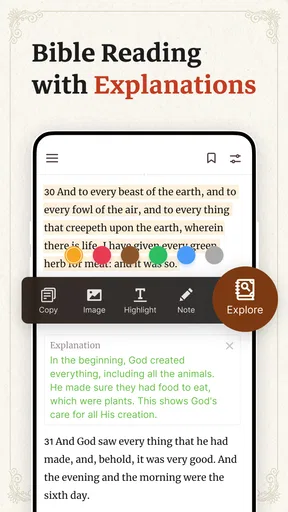
Its study angle and verse-of-the-day sharing make it more than a bare text reader, at least in intent. A daily verse can serve as a simple prompt to pause, while sharing a passage can make it easier to discuss a line with family or a study group. I would treat those tools as convenient additions, not a substitute for a carefully structured study resource. The app’s central value remains having the KJV available for reading.
Quick access matters more than spectacle
For a Bible reader, speed is less about animation and more about getting from a thought to the relevant passage without friction. I judge this kind of app by whether it feels suited to brief, repeated visits: checking a verse someone mentioned, continuing a reading habit, or looking up a familiar passage before a conversation. The offline focus is especially helpful for that pattern because connectivity is one less dependency when opening the text.
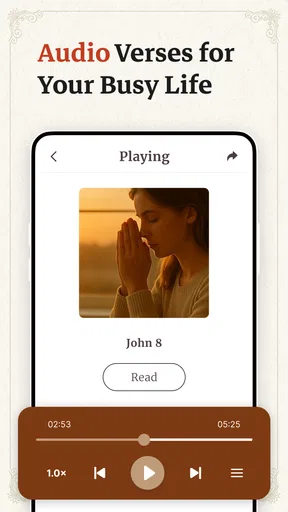
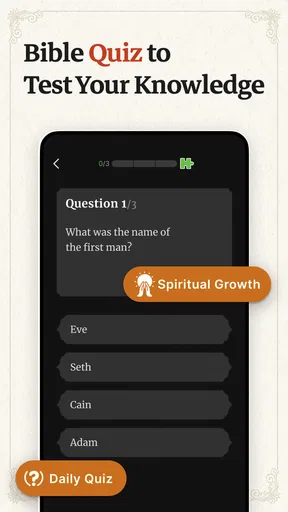
I would not expect a KJV reader to feel like a large multimedia library, and that is a reasonable trade-off. If your main task is reading, a focused interface can be preferable to a crowded collection of audio, videos, study courses, and multiple translations. Conversely, readers who want all of those materials gathered in one place may find a broader Bible platform more useful, even if its extra options make the experience feel busier.
A practical tip is to use the app with a clear reading intention. Before opening it, decide whether you are reading a whole chapter, revisiting a verse, or sharing a passage. That small habit can keep a Bible app from becoming just another place to tap through daily content. It also makes the KJV’s older phrasing easier to engage with: reading a passage in context often clarifies a sentence that might seem opaque when viewed alone.
When use gets heavier
Heavier use for this app is likely to mean longer reading sessions, repeated passage lookups, and frequent movement between personal reading and shared verses. Those are the moments when navigation and text legibility matter more than a headline feature. I would try a representative session early on: read a chapter, leave the app, return, and find a passage again. That gives you a more useful sense of whether its flow fits your habits than a quick glance at the opening screen.
Verse sharing is a particularly practical workflow when a passage is part of an ongoing conversation. Rather than trying to remember a reference later, you can use the app’s sharing purpose to pass along the text at the moment it comes to mind. The trade-off is that a shareable verse can lose nuance when separated from its surrounding chapter. I recommend including the reference and reading the nearby verses before drawing a conclusion, especially when the wording is being discussed closely.
For personal study, I would pair the app with a notebook or a separate reference source if I needed to track themes across books or investigate historical context. A readable text and a daily verse can support reflection, but they do not automatically provide the kind of scholarly commentary or cross-translation comparison that deeper study may call for. This is one of the clearest cases where a dedicated study Bible or a more research-focused app is the better tool.
Reliability and the offline promise
Offline reading is the feature that most directly affects reliability. It can make the app useful when a signal is absent, but I still recommend checking access to your intended reading before relying on it for an important session away from connectivity. That is a sensible precaution with any offline-focused reader: test the exact part of the app you plan to use, rather than discovering a limitation when you are already offline.
For everyday reliability, I value a predictable return to the text more than a long list of extras. If you use the app in short bursts, it helps to make a note of the chapter or reference you want to revisit, particularly if you are following a reading plan outside the app. That is not a criticism of this title so much as a practical way to keep your routine intact across interruptions, device changes, or a busy day.
The app has a 4.9 average from around twelve million ratings, and it has passed one hundred million installs. Those figures suggest that it has reached a very large readership, though popularity alone cannot tell you whether its translation and reading style match your needs. I would use those figures as a sign that it is widely used, then make the decision based on the KJV focus and your own preference for a straightforward offline reading experience.
Choosing a device and managing expectations
The app is rated for Everyone and requires Android 7.0 or later. Its current version is 6.5.8, and it was released on March 4, 2019. For someone using a compatible Android phone, the basic question is less about having the newest hardware and more about whether the screen is comfortable for extended reading. A small display can be perfectly adequate for a verse lookup, while longer sessions may feel better on a larger phone or tablet if the app suits that device.
I would keep expectations sensible on a device with limited storage or an older operating system. The offline design is a reason to value dependable local access, but it is still worth leaving room for ordinary app updates and checking that the phone meets the minimum system requirement. If your device falls below Android 7.0, this version is not a suitable choice; if you have an iPhone, look for an iOS edition in the app store rather than assuming this Android release applies to it.
The app is free to install, with in-app purchases ranging from $0.99 to $49.99 per item. I would explore the core reading experience first and only consider a purchase if a specific optional item addresses a need you actually have. That approach avoids paying for extras simply because they appear in an app, and it is especially sensible if your goal is only to read the KJV offline.
Who will get the most from it
I would recommend Bible Offline-KJV Holy Bible to a reader who already likes the King James Version and wants a convenient way to keep it available for ordinary reading. It also makes sense for someone who shares verses regularly or wants a daily prompt to support a personal routine. Its appeal is clearest when the KJV itself is part of the reason you are choosing the app, rather than just one translation among many.
Consider a realistic weekday use: you have a few minutes before an appointment, want to revisit a passage from a conversation, and may not have dependable reception inside the building. An offline-oriented KJV reader can make that small window easier to use. I would open the chapter before leaving, note the reference, and read a little context around the verse. This workflow is modest, but it shows the app’s practical value better than expecting it to replace a full study library.
I would steer readers elsewhere if they need several translations for comparison, detailed commentaries, structured courses, or extensive academic reference material. A general Bible app with broader resources may be a better fit, while a printed Bible can be preferable for anyone who wants to avoid reading on a phone or reduce digital distractions. And if the KJV’s language feels difficult rather than meaningful, a contemporary translation is likely to make daily reading more approachable.
My performance verdict
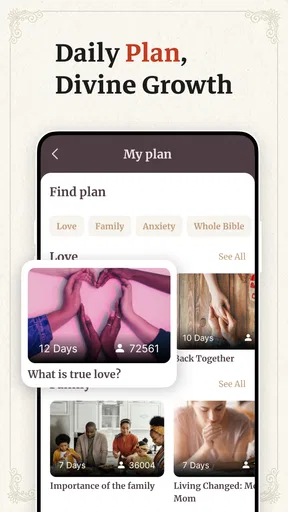
As a focused KJV Bible app, this is a sensible choice for people who value access to the text and the freedom to read without depending on a connection. Its strongest everyday case is a short, repeatable routine: open a passage, read it in context, and share it when useful. The daily-verse and study orientation add direction, while the familiar translation gives the app a clear identity.
I would not choose it expecting a complete research suite or a broad translation collection. Its KJV focus is both its main strength and its most important limitation, and readers should decide whether that is the version they genuinely want to spend time with. For the right person, it keeps the essentials close; for someone seeking a more expansive or modern-language experience, another Bible app will serve better.
Overall, I see it as a practical companion rather than an all-purpose religious library. Its 4.9 average and broad reach are reassuring context, but the deciding question is personal: do you want the King James Version readily available for reading and sharing? If yes, Bible Offline-KJV Holy Bible is worth trying as a free starting point, with purchases left for moments when an optional extra has a clear purpose.
Pros and cons
Pros
- Read the King James Version without an internet connection.
- Search scripture passages by keyword or reference.
- Bookmark verses for quick access later.
- Adjust text size for more comfortable reading.
- Daily verse reminders can support a regular reading habit.
Cons
- The King James wording may feel dated to some readers.
- Some features or content may require an internet connection.
- Ads may interrupt the reading experience.
- Search results can be less useful for broad or vague terms.
- The app may request permissions that are not essential for reading.


